Compounded Versus Brand-Name GLP-1s: The Honest Comparison, Including the Risks
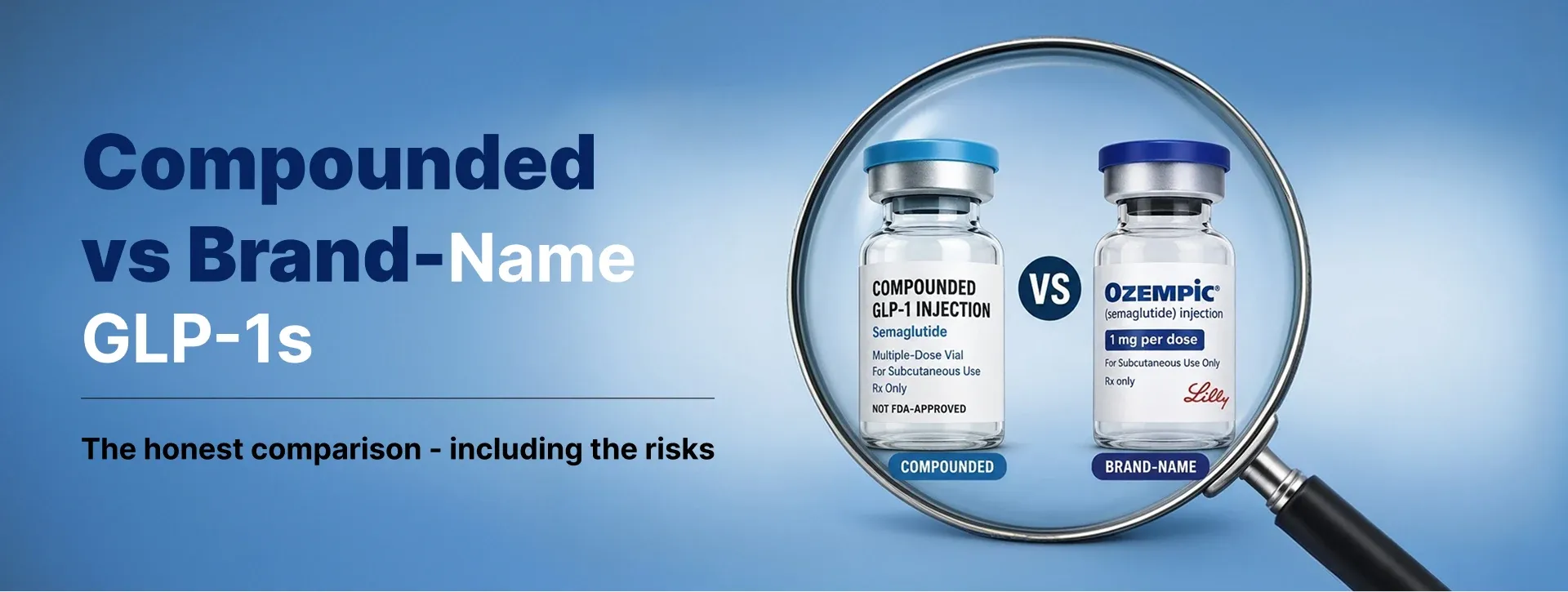
The meteoric rise of GLP-1 medications like Wegovy, Ozempic, Mounjaro, and Zepbound has completely transformed medical weight loss—but it has also created an overwhelming supply shortage and a massive spike in out-of-pocket costs. Facing monthly price tags upwards of $1,000 for brand-name options, millions of patients are turning to compounded semaglutide and tirzepatide as an accessible alternative.
However, navigating the landscape between brand-name pharmaceuticals and compounded formulations can feel like walking through a regulatory gray area. Are compounded GLP-1s just as safe? How do state-licensed 503A compounding pharmacies differ from FDA-registered 503B facilities? And what critical risks—from unapproved salt variants to multidose vial measuring mistakes—should you know before taking your first dose?
Below is a transparent, evidence-based breakdown of compounded versus brand-name GLP-1 therapies, giving you the facts on safety, legal standards, quality sourcing, and telehealth compliance so you can make an informed decision for your health.
Key Takeaways
• Brand-name GLP-1s (Wegovy, Ozempic, Mounjaro, Zepbound) are FDA-approved; compounded semaglutide and tirzepatide are prepared by licensed pharmacies and are not independently FDA-approved as finished products.
• Compounding is generally permitted only in specific circumstances - such as drug shortages or patient-specific customization needs - and that context matters for legality and safety.
• Quality depends heavily on the sourcing pharmacy: reputable compounders use pharmaceutical-grade active ingredient (base form), not unauthorized salt forms.
• Multidose vials require the patient to measure each dose, which carries more room for error than a single-use, prefilled pen.
• Cost is often positioned lower for compounded options than brand-name list price, but the gap shifts - check the GLP weight loss program for current pricing and eligibility rather than relying on any number printed here.
• A trustworthy telehealth provider will be transparent about which pharmacy prepares your medication, and will be HIPAA compliant and LegitScript certified.
Understanding GLP-1s: Brand-Name vs. Compounded
Brand-name GLP-1 medications are FDA-approved drugs manufactured in fixed doses by their original pharmaceutical companies. Compounded GLP-1s are semaglutide or tirzepatide prepared individually by licensed pharmacies under defined regulatory conditions, and are not independently FDA-approved as finished drug products - the difference matters for both safety and legality.
Brand-Name GLP-1 Medications
Wegovy and Ozempic are both semaglutide, manufactured by Novo Nordisk; Ozempic is approved for type 2 diabetes management and Wegovy for chronic weight management. Mounjaro and Zepbound are both tirzepatide, manufactured by Eli Lilly, with Mounjaro approved for type 2 diabetes and Zepbound for chronic weight management. Each is FDA-approved as a finished product, meaning the manufacturer has demonstrated safety, efficacy, and manufacturing consistency to the FDA's satisfaction, and each ships in standardized, prefilled devices.
What Are Compounded GLP-1s? (503A vs. 503B)
Compounding is the practice of a licensed pharmacy or outsourcing facility preparing a customized medication rather than dispensing a manufacturer's finished product. Two regulatory pathways apply:
• Section 503A pharmacies: state-licensed compounding pharmacies that prepare medications for an individual, identified patient based on a prescriber's order. They are regulated primarily at the state pharmacy board level, with FDA oversight of certain practice standards.
• Section 503B outsourcing facilities: FDA-registered facilities that can compound in larger batches without a patient-specific prescription in hand at the time of production, and are held to additional current good manufacturing practice (cGMP) expectations beyond a typical 503A pharmacy.
Feature Comparison: Brand-Name vs. Compounded GLP-1s
Here's how the two options stack up across the factors that matter most to patients.
FDA Approval Status: Brand-name products are FDA-approved as finished drugs. Compounded semaglutide and tirzepatide are not independently FDA-approved; they are prepared under 503A or 503B pharmacy oversight.
Manufacturing Standard: Brand-name medications are produced in manufacturer cGMP facilities. Compounded medications are prepared in a licensed 503A pharmacy or a registered 503B outsourcing facility.
Administration Form: Brand-name GLP-1 injections come in single-use, prefilled auto-injector pens; an oral semaglutide brand-name tablet also exists. Compounded formulations are commonly dispensed in multidose vials with separate syringes, though some pharmacies also offer compounded oral tablets.
Cost Position: Compounded options are frequently positioned as more accessible than brand-name list price, but exact figures shift with manufacturer discount programs, insurance coverage, and pharmacy pricing.
Packaging: Brand-name pens arrive in tamper-evident, individually dosed manufacturer packaging. Compounded medication packaging is set by the dispensing pharmacy - ask your provider which pharmacy prepares your prescription and how it's packaged and labeled.
An Honest Look at the Risks & Quality Factors
Quality of Active Ingredient: Base vs. Salt Forms
Not all "semaglutide" is the same. FDA-approved products use the semaglutide base form. Some compounding operations have used unauthorized salt forms - such as semaglutide sodium or semaglutide acetate - which have not been established as safe or effective substitutes and have been the subject of FDA warnings. A reputable compounding pharmacy will confirm in writing that it uses the same active ingredient form found in the approved product, not a salt variant.
Multidose Vials vs. Prefilled Pens
Brand-name pens are pre-measured and designed to minimize user error. Compounded medication dispensed in a multidose vial requires the patient to draw up each dose with a syringe, which introduces more opportunity for measurement mistakes - especially for patients new to self-injection. A provider offering semaglutide injection online through a compounding pharmacy should also provide clear dosing instructions, a dosing syringe matched to the concentration dispensed, and direct access to clinical support if you're ever unsure of a dose.
Sourcing & Regulatory Compliance
Before starting any compounded medication, it's reasonable to ask: Which pharmacy compounds this? Is it 503A or 503B, and is it licensed in my state? What active ingredient form does it use? These are fair questions, and a transparent provider should answer them without hesitation.
How to Safely Choose a Telehealth Provider
A trustworthy telehealth GLP-1 provider should be able to demonstrate all of the following clearly, before you ever hand over a form of payment.
• HIPAA compliance - your health information is encrypted and protected under recognized privacy standards.
• LegitScript certification - independent verification that the platform operates as a legitimate digital healthcare merchant.
• Licensed prescribers - physicians or advanced practice providers licensed in your state who personally review your intake.
• Named, licensed pharmacy partners - willingness to disclose which 503A or 503B pharmacy prepares your medication.
• Clear dosing and safety guidance - written instructions and a real point of contact if you have questions after your prescription arrives.
My Med Provider: Transparent, Compliant Care
My Med Provider's weight loss lineup is built around disclosed, pharmacy-sourced compounded medications - not a blind box shipped to your door.
• Compounded semaglutide injection - prepared by licensed 503A compounding pharmacies.
• Compounded semaglutide oral tablet - for patients who prefer not to self-inject.
• Compounded tirzepatide injection - dispensed through the same licensed pharmacy network as our tirzepatide injection online program.
Every plan is backed by HIPAA-compliant data handling, LegitScript certification, and sourcing exclusively from US-licensed 503A compounding pharmacies held to FDA-aligned compounding standards - using base active ingredient, never unauthorized salt forms.
How It Works
• Online Consultation - complete a secure medical intake covering your health history and weight loss goals.
• Medical Review - a licensed provider evaluates your eligibility and confirms the appropriate compounded therapy.
• Prescription & Dispensing - your prescription is sent to an accredited, disclosed compounding pharmacy.
• Delivery & Support - your medication ships directly to you, with ongoing clinical follow-up as you progress.
Frequently Asked Questions
Are compounded GLP-1s FDA-approved?
No. Compounded semaglutide and tirzepatide are not independently FDA-approved as finished drug products. They're prepared by licensed 503A pharmacies or registered 503B outsourcing facilities under specific regulatory conditions, using active ingredients sourced separately from the medications' own manufacturing lines.
What is the difference between semaglutide injection and semaglutide oral tablets?
Both deliver the same active ingredient, semaglutide, but by different routes: injections are administered subcutaneously (typically weekly), while semaglutide tablet online options are taken orally, usually more frequently, and absorption can vary with food and timing. Your provider can help determine which route fits your routine and clinical needs.
Is my personal and health data secure during online consultation?
Reputable telehealth platforms, including My Med Provider, are required to maintain HIPAA compliance, meaning your health information is encrypted, access-controlled, and handled under federal privacy standards throughout your consultation and treatment.
How does LegitScript certification protect me as a patient?
LegitScript independently verifies that a digital healthcare merchant follows applicable laws and industry standards for online prescribing and pharmacy practice. A LegitScript-certified provider has been vetted against fraud, unlicensed practice, and unsafe dispensing patterns - giving you an outside check beyond the provider's own claims.